What Is TMD?
The temporomandibular joints (TMJ) connect your lower jaw to your skull and allow you to speak, chew, yawn, and move your jaw comfortably. TMD, or temporomandibular disorder, refers to a group of conditions affecting these joints, the surrounding muscles, or both.
TMD can develop for many reasons, including clenching and grinding, an imbalanced bite, worn or damaged teeth, injury, arthritis, or muscle strain. Because the causes vary from person to person, successful treatment begins with an accurate diagnosis.
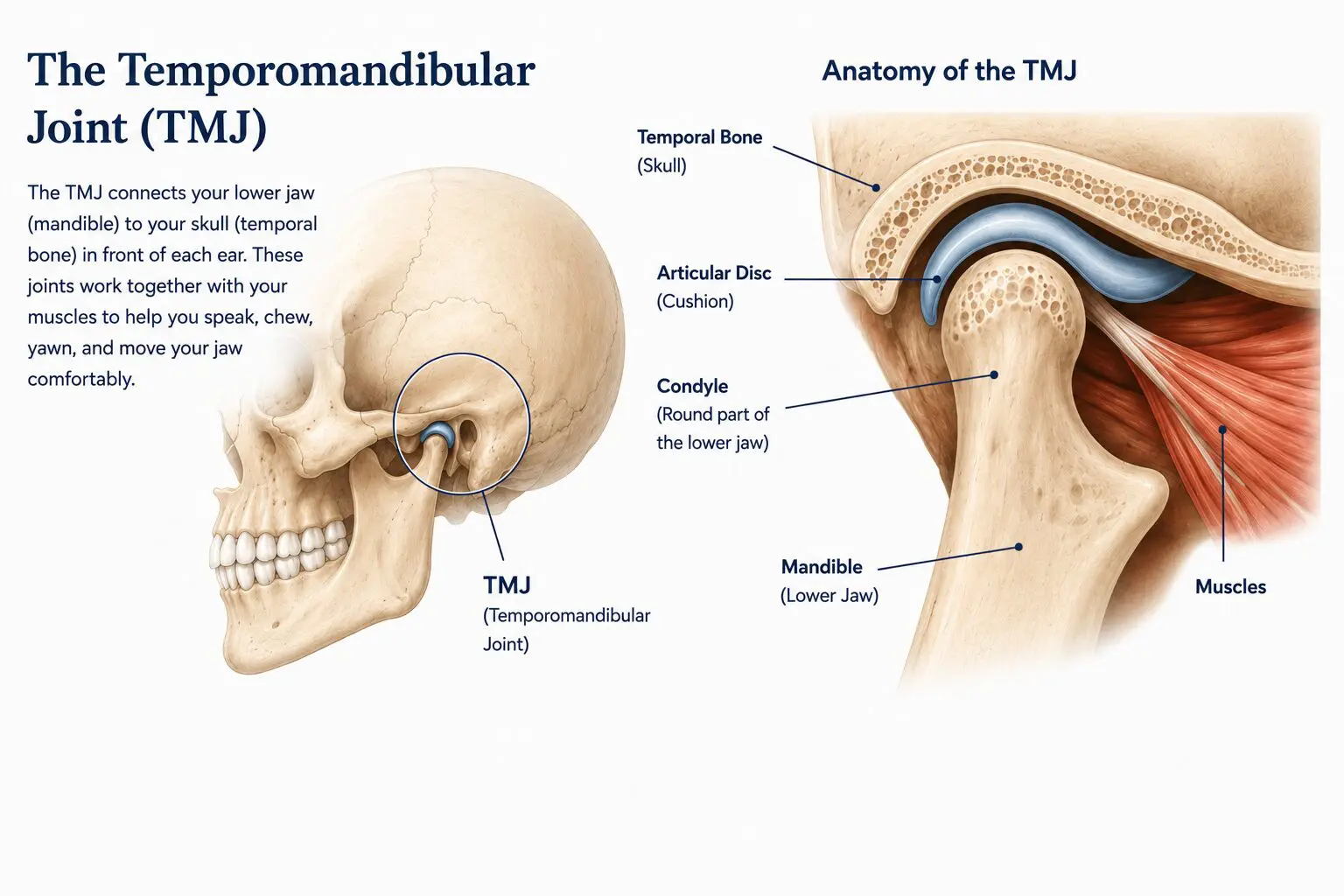
The TMJ connects the lower jaw to the skull and allows the jaw to open, close, and move comfortably.
Common Symptoms of TMD
TMD can cause a wide range of symptoms, many of which are not always associated with the jaw.
Common symptoms include:
- Jaw pain or tenderness
- Clicking, popping, or grinding sounds when opening or closing your mouth
- Difficulty opening your mouth fully
- Jaw locking
- Pain when chewing
- Frequent headaches
- Neck or shoulder discomfort
- Worn, chipped, or fractured teeth caused by clenching or grinding
If you experience one or more of these symptoms, an evaluation can help determine whether TMD is contributing to the problem.
Understanding the Cause of Your Symptoms
No two patients experience TMD the same way. Some people primarily have muscle pain, while others have problems involving the jaw joint, their bite, or worn teeth.
Because TMD can have many different causes, successful treatment begins with an accurate diagnosis. Before recommending treatment, we take the time to identify what is contributing to your symptoms.
What to Expect During Your TMD Evaluation
Your evaluation includes an assessment of your jaw joints, muscles, bite, teeth, and symptoms. We also discuss your medical history, when your symptoms began, and anything that seems to make them better or worse.
Once we understand what is contributing to your symptoms, we recommend the treatment options that are most appropriate for your situation.
“Every case of TMD is different. The key to successful treatment is understanding what’s causing the problem before deciding how to treat it.”
— Dr. Craig Longenecker
TMD Treatment Options
Treatment depends on the cause of your symptoms. Your treatment plan may include one or more of the following.
Occlusal Splints and Night Guards
A custom occlusal splint or night guard helps protect the teeth from the effects of clenching and grinding while reducing excessive forces on the jaw joints and surrounding muscles. These custom-made appliances are often recommended for patients experiencing jaw pain, muscle fatigue, or nighttime grinding.
Bite Adjustment (Occlusal Equilibration)
Sometimes small differences in the way your teeth come together place excessive stress on the jaw joints and muscles. Occlusal equilibration involves carefully adjusting the bite to create a more balanced, comfortable bite when appropriate.
Physical Therapy
Because TMD often affects the muscles of the jaw, face, and neck, physical therapy may be recommended as part of your treatment plan. We work closely with trusted physical therapists when additional support is beneficial.
Coordinated Care With Other Specialists
Some TMD symptoms overlap with conditions involving the ears, nerves, or other areas of the head and neck. When appropriate, we coordinate care with specialists, including ENT physicians, neurologists, and other healthcare providers to help ensure an accurate diagnosis and comprehensive treatment.
When Should You Seek Treatment?
Occasional jaw clicking without pain is not always a cause for concern. However, if you are experiencing persistent jaw pain, headaches, difficulty chewing, limited jaw movement, or symptoms that interfere with your daily activities, it is a good idea to schedule an evaluation.
Early diagnosis often allows treatment to begin before symptoms become more severe or lead to additional wear on your teeth and jaw joints.
Insurance Information
Hereford Dental Health is not contracted with any dental insurance plans. Payment is due at the time of service, and our team will submit claims on your behalf to help you maximize any available out-of-network benefits.
We work hard to make the reimbursement process as straightforward as possible and are happy to answer questions about insurance, payment options, and treatment costs before your appointment.
FAQs About TMJ Treatment
What is the difference between TMJ and TMD?
TMJ stands for temporomandibular joint, the joint that connects your jaw to your skull. TMD, or temporomandibular disorder, refers to conditions affecting the jaw joints, muscles, or surrounding structures. Although many people say they have “TMJ,” they are usually referring to TMD.
Can a night guard help TMD?
A custom night guard or occlusal splint can help protect your teeth from the effects of clenching and grinding while reducing excessive forces on the jaw joints and surrounding muscles.
Can TMD cause headaches?
Yes. The muscles and joints involved in jaw movement are closely connected to the muscles of the face, head, and neck. When these muscles become strained due to TMD, pain can radiate into the temples and head, resulting in frequent headaches.
Does jaw clicking always mean I have TMD?
Not necessarily. Some people have jaw clicking without pain or limited movement and never require treatment. However, if clicking is accompanied by pain, locking, difficulty chewing, or other symptoms, it is worth having your jaw evaluated.
Where can I get TMJ treatment in Monkton, MD?
Hereford Dental Health provides TMD evaluations and treatment for patients in Monkton and throughout northern Baltimore County.