How a Dental Bridge Replaces Missing Teeth
A dental bridge is a custom restoration that fills the space left by one or more missing teeth. A traditional bridge consists of one or more artificial teeth supported by dental crowns that are placed on the healthy teeth on either side of the gap.
Each bridge is custom designed to restore your bite, maintain proper tooth alignment, and create a natural-looking smile.
When a Dental Bridge May Be the Right Solution
A dental bridge may be recommended when one or more teeth are missing and the neighboring teeth are healthy enough to support the restoration.
Common reasons to consider a dental bridge include:
- Replacing one or more missing teeth
- Restoring chewing ability
- Improving speech
- Preventing neighboring teeth from shifting
- Restoring the appearance of your smile
- Maintaining proper bite alignment
During your examination, Dr. Longenecker will evaluate your oral health and discuss whether a dental bridge is the best option for your needs.
Types of Dental Bridges We Offer
Several types of dental bridges are available, and the most appropriate option depends on the location of the missing tooth, the health of the surrounding teeth, and your overall treatment goals.
Traditional Dental Bridge
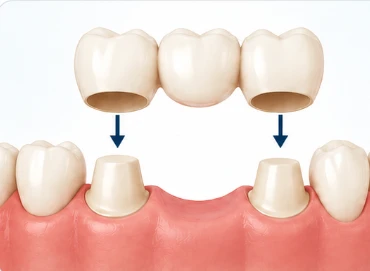
The most common type of bridge. One or more artificial teeth are supported by dental crowns placed on the healthy teeth on either side of the gap.
Maryland Bridge
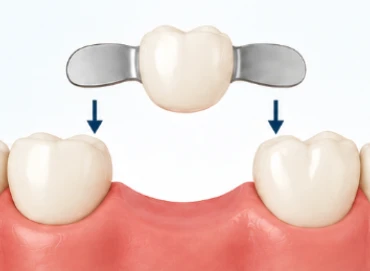
A more conservative option that uses metal or ceramic wings bonded to the backs of the adjacent teeth instead of dental crowns. Maryland bridges are most often used to replace front teeth.
Implant-Supported Bridge
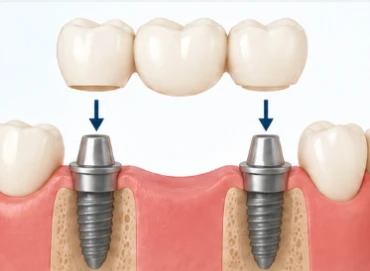
Rather than being supported by natural teeth, this type of bridge is attached to dental implants that have been surgically placed in the jawbone. Implant-supported bridges are often recommended when replacing multiple missing teeth.
During your consultation, Dr. Longenecker will recommend the type of bridge that best fits your oral health needs, budget and long-term goals.
Traditional Bridge
A traditional bridge uses crowns on the teeth on both sides of the gap to support one or more artificial teeth.
Maryland Bridge
A Maryland bridge uses a metal or porcelain framework that bonds to the back of the adjacent teeth to hold the artificial tooth in place.
Implant-supported Bridge
An implant-supported bridge uses dental implants in the jawbone to support one or more artificial teeth.
Why Replacing Missing Teeth Is Important
When a tooth is lost, the surrounding teeth can gradually shift into the empty space. This movement may affect your bite, make certain areas more difficult to clean, and increase the risk of additional dental problems over time.
Replacing a missing tooth with a dental bridge helps restore your ability to chew comfortably, supports clearer speech, maintains proper tooth alignment, and restores the appearance of your smile. Addressing tooth loss early can often help preserve your long-term oral health and reduce the need for more extensive treatment in the future.
Dental Bridge vs. Implant
A dental bridge and a dental implant are both designed to replace missing teeth, but they differ in how they are supported.
A traditional dental bridge relies on the healthy teeth on either side of the gap for support. This means those teeth must be prepared to accommodate dental crowns. A dental implant, on the other hand, is supported by a titanium post that is surgically placed in the jawbone, allowing the neighboring teeth to remain untouched.
Because a dental implant involves a surgical procedure and a healing period, treatment typically takes longer than a traditional dental bridge. Both options provide a reliable, long-lasting solution for replacing missing teeth, and the best choice depends on your individual needs and goals.
What to Expect During Treatment
Once it has been determined that a dental bridge is the right solution for your smile, treatment begins with preparing the supporting teeth.
If a traditional bridge is being placed, the healthy teeth on either side of the gap are carefully reshaped by removing a small amount of the outer tooth structure. This allows room for the dental crowns that will anchor the bridge and ensures a precise, comfortable fit.
Next, digital impressions are taken using our iTero® scanner. These impressions are used to create your custom bridge, designed to restore both the appearance and function of your smile.
When your bridge is ready, it is adjusted to ensure a comfortable bite, and permanently bonded into place.
Caring for Your Dental Bridge
With proper care, a dental bridge can provide many years of reliable function.
To help protect your bridge:
- Brush twice daily with fluoride toothpaste
- Clean underneath the bridge using floss threaders or other recommended cleaning aids
- Attend routine dental exams and cleanings
- Avoid chewing on ice or other very hard objects
- Follow any home care recommendations provided by our team.
Good oral hygiene is essential for protecting both your bridge and the supporting teeth.
Insurance Information
Hereford Dental Health is not contracted with any dental insurance plans. Payment is due at the time of service, and our team will submit claims on your behalf to help you maximize any available out-of-network benefits.
We work hard to make the reimbursement process as straightforward as possible and are happy to answer questions about insurance, payment options, and treatment costs before your appointment.
FAQs About Dental Bridges
How long does a dental bridge last?
With proper care and regular dental visits, a dental bridge can often last 10 to 15 years or longer.
Can a dental bridge replace multiple teeth?
Yes. Dental bridges can replace one or more missing teeth, depending on the location of the gap and the health of the supporting teeth.
Is a dental bridge permanent?
A traditional dental bridge is permanently cemented into place and is not removable by the patient.
How much does a dental bridge cost?
The cost of a dental bridge depends on the type of bridge being placed, the number of teeth being replaced, and whether additional treatment is needed. As a general estimate, a traditional dental bridge typically costs between $2,000 and $6,000, while a Maryland bridge generally ranges from $1,500 to $2,500. During your consultation, we will provide a personalized treatment plan and review your insurance benefits and estimated out-of-pocket costs before treatment begins.
Is there a dentist in Monkton that provides dental bridges?
Dr. Longenecker provides custom dental bridges at Hereford Dental Health in Monkton for patients throughout northern Baltimore County. Each bridge is designed to restore the function, appearance, and stability of your smile.